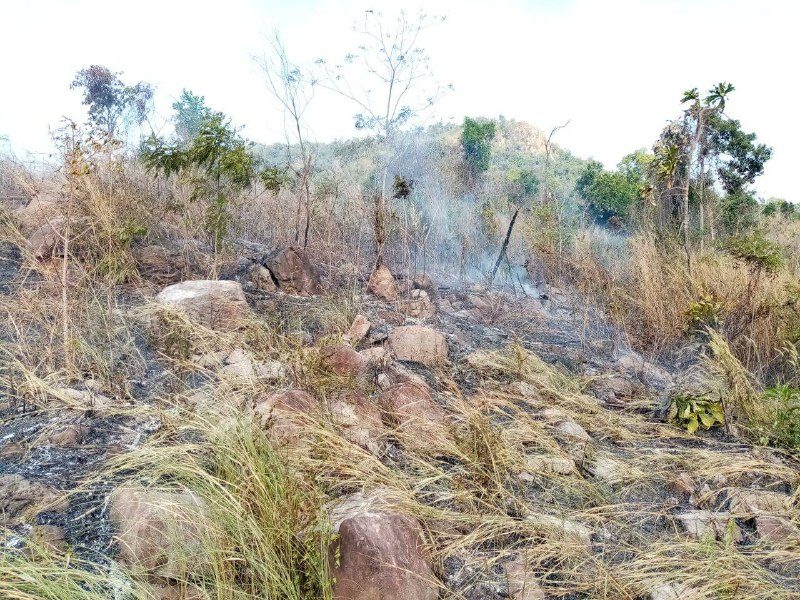
In November 2020 we started planting trees by hand on cleared land, with a partner. By 2021 about 12 hectares had been planted.
In late November we finished a forest trail, about two kilometres under the remaining canopy, from the house to the planting site. It was for walking and cycling, and so we could reach the site quickly in the dry season if there was a fire.
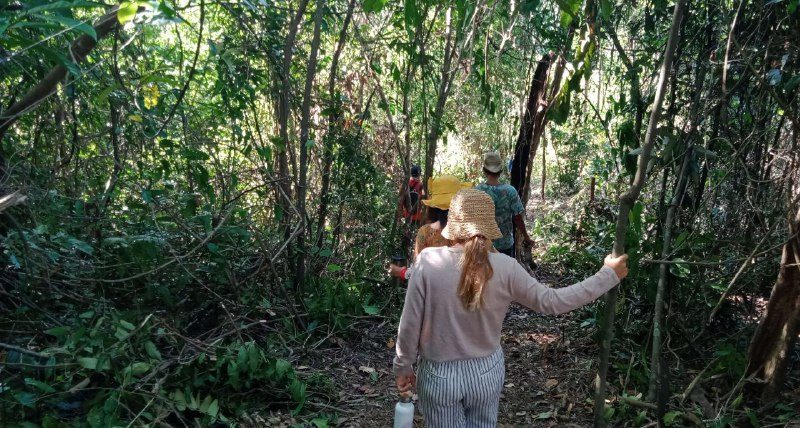
At the end of January 2021 we walked the site. At least nine in ten of the trees planted in November were alive. The dry season was starting, so we said we would watch for fire until the rains.
On 5 March 2021, around two in the afternoon, a fire reached the planting site. About a fifth of it burned, with the seedlings in it. That week much of the valley was burning.
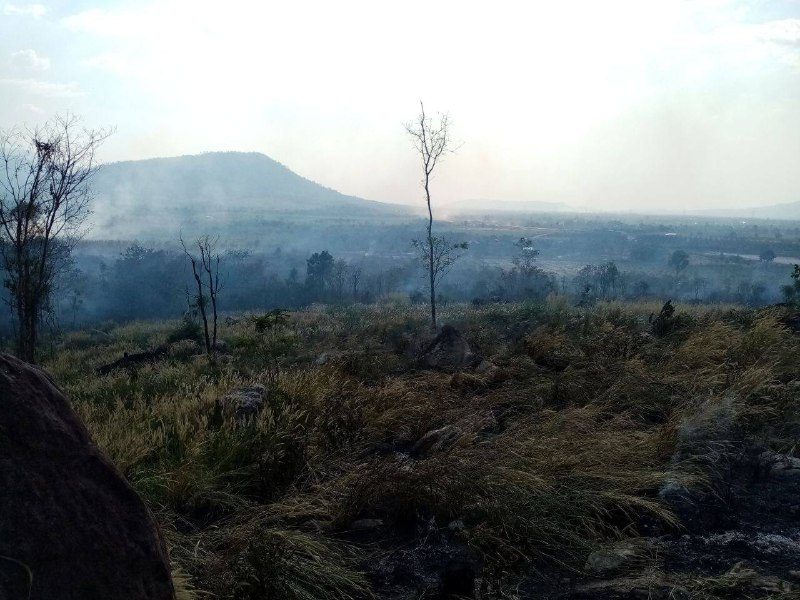
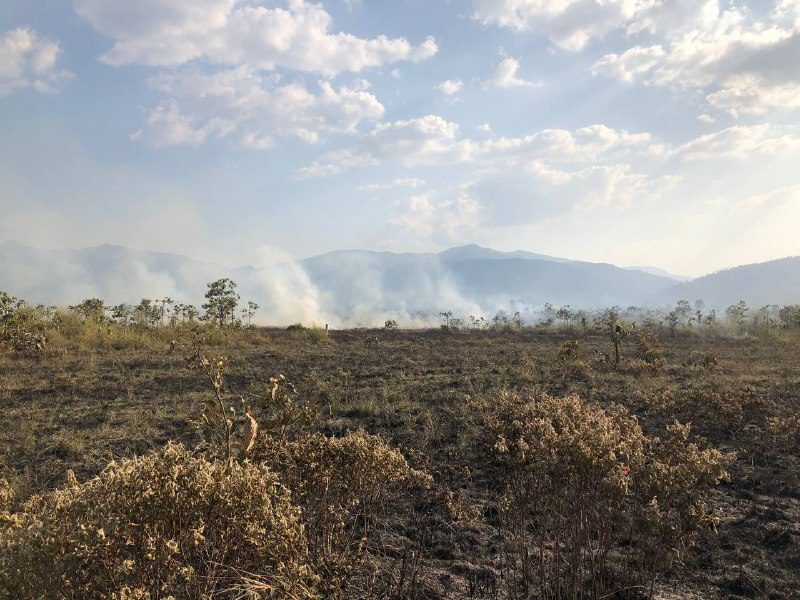
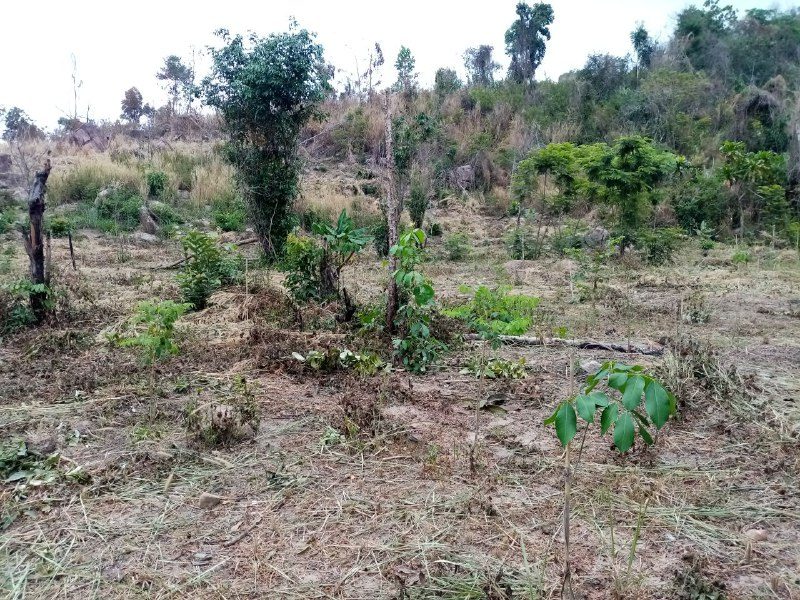
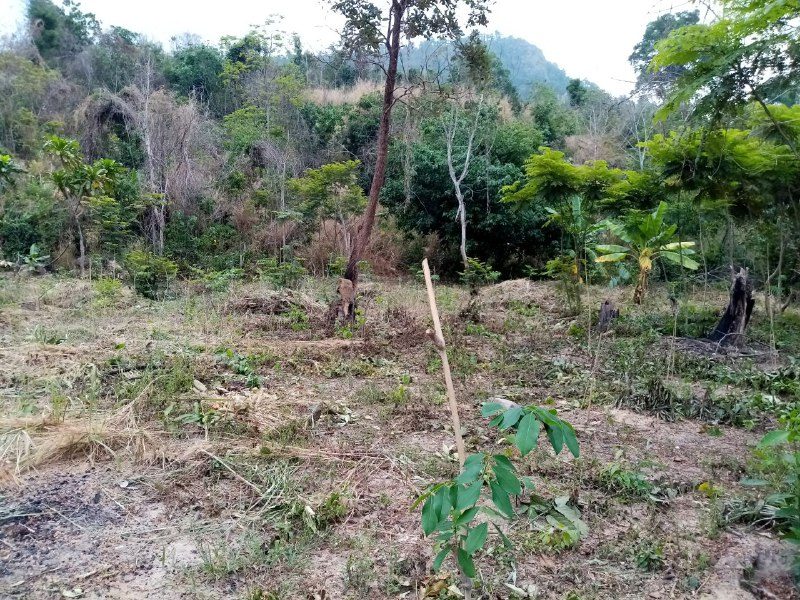
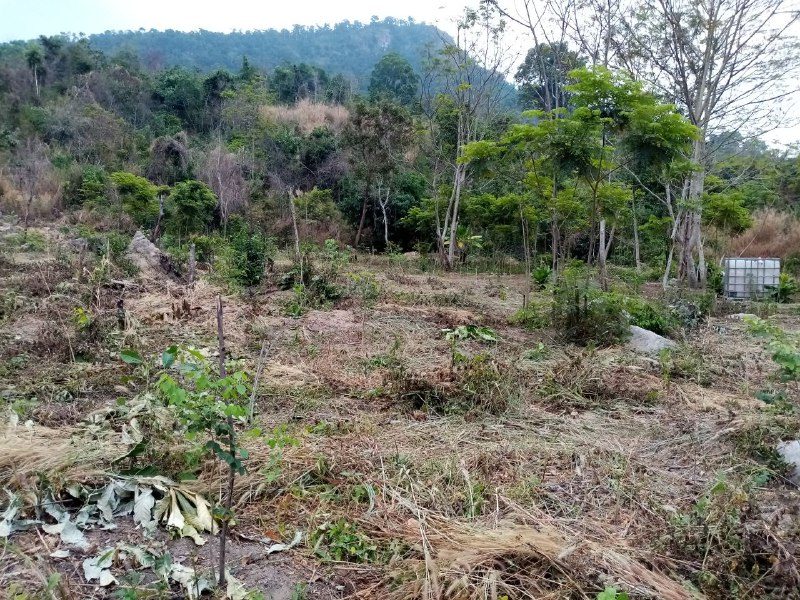
In the days after, we cut the dry grass around the remaining seedlings so the next fire would have less to burn. Without the fire, nine in ten of the seedlings had come through the heat of the dry season.
Cutting grass every dry season is not a long-term answer. At the time we wrote that we were looking at agroforestry and other ways to deal with fire, and asked for ideas.
Fire has burned through the planted area a few times since. Any planting we do next has to plan for fire first.
Notes and photos were first posted on our Telegram channel: the trail, checking the trees, the fire, clearing the grass.